

Imagine a healthcare organisation where your best nurses don’t just stay, they grow. A clinical environment where every ward manager doesn’t just manage but genuinely leads; where nurses feel so invested in, so capable, and so connected to their purpose that leaving never crosses their mind. This isn’t an aspiration reserved for the best-funded systems. It is the reality that evidence-based leadership development makes possible right now, in the organisations bold enough to pursue it.
Forget the days of sign-on bonuses masquerading as a retention strategy. Forget the agency spending that quietly drains millions from operating budgets while solving nothing at the root. The Wordsburg Nurse Retention Accelerator is an art and science, a structured orchestration of diagnosing the precise leadership gaps that drive nurses out and building the human capability that keeps them. It moves healthcare organisations beyond the reactive cycle of recruiting and replacing, and into the only territory that delivers lasting change: the culture, the leadership, and the belonging that nurses will not walk away from.
Healthcare Has Misdiagnosed Its Own Crisis
The word “burnout” appears in virtually every nursing retention report. But burnout is a symptom, not a root cause. The Self-Determination Theory (SDT) tells us burnout occurs when three fundamental human needs go unmet: autonomy, competence, and relatedness. And the research is unambiguous about what creates those conditions: poor immediate leadership.
The four root-cause drivers are mapped to unmet SDT needs, each addressable through leadership behaviour change:
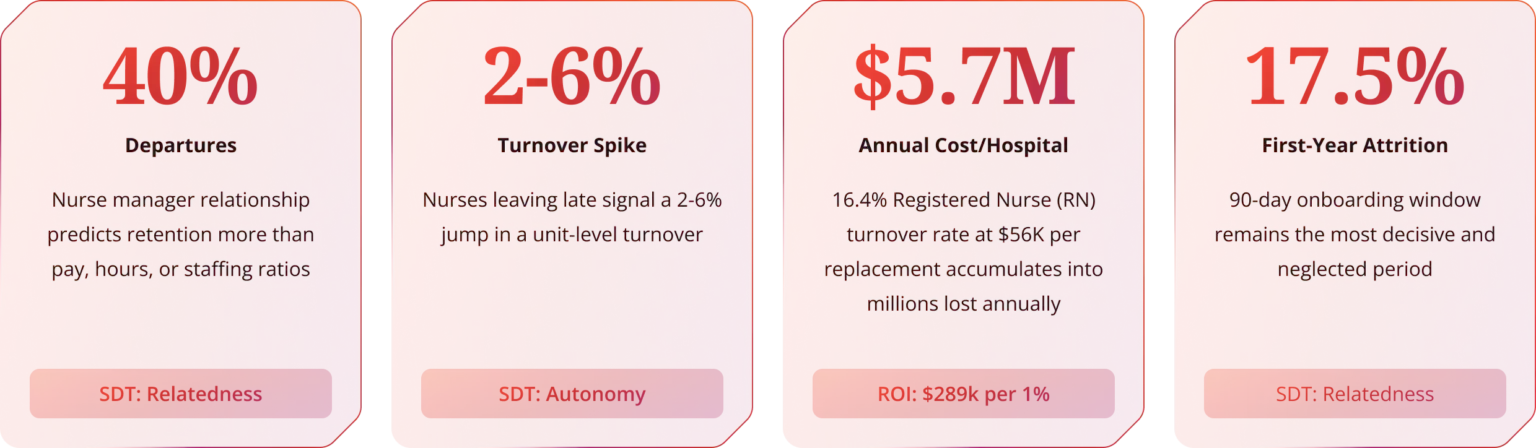
Source: Laudio Insights, AONL, NSI Nursing Solutions, Inc., Wisconsin Center for Nursing, Smith, C.J., DesRoches, S.L., Street, N.L.W., Journal of Healthcare Risk Management.
The Numbers That Should Be On Every CFO’s Dashboard
Healthcare finance teams routinely model capital expenditure and margin compression. Remarkably few include the true cost of nursing attrition in their operating loss calculations, even though it dwarfs most line items they do track.
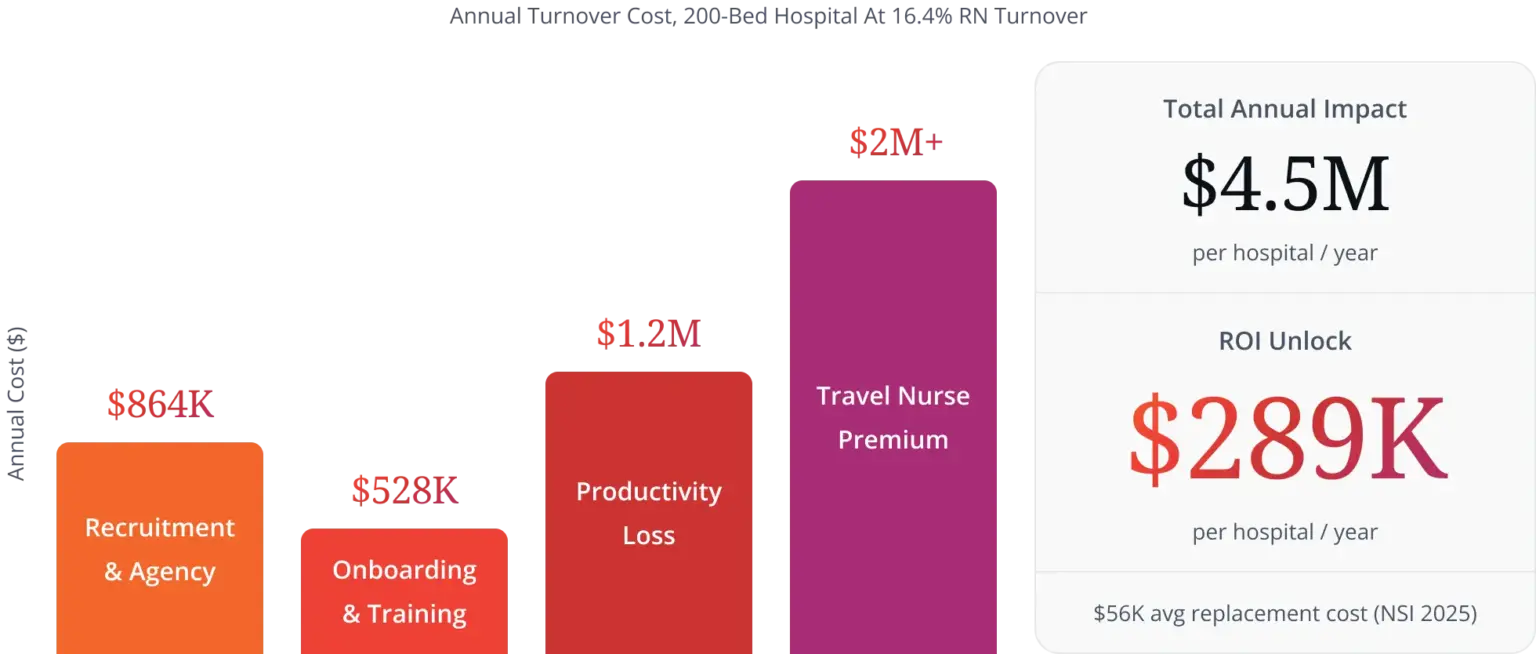
Source: NSI 2025, People Element 2025, AAG Health 2025
The inconvenient truth for healthcare executives: investing in nurse manager leadership development is one of the highest-ROI capital allocation decisions available, with payback periods measured in months, not years. US hospitals spent roughly $1.7 billion on travel nurses in 2024. That number is a direct tax on leadership failure.

The Self-Determination Framework For Nurse Retention
Decades of nursing workforce research converge on a short list of variables, and leadership quality appears on virtually every list, in every setting, across every system studied. The SDT framework maps the three root-cause needs that, when unmet, produce burnout.
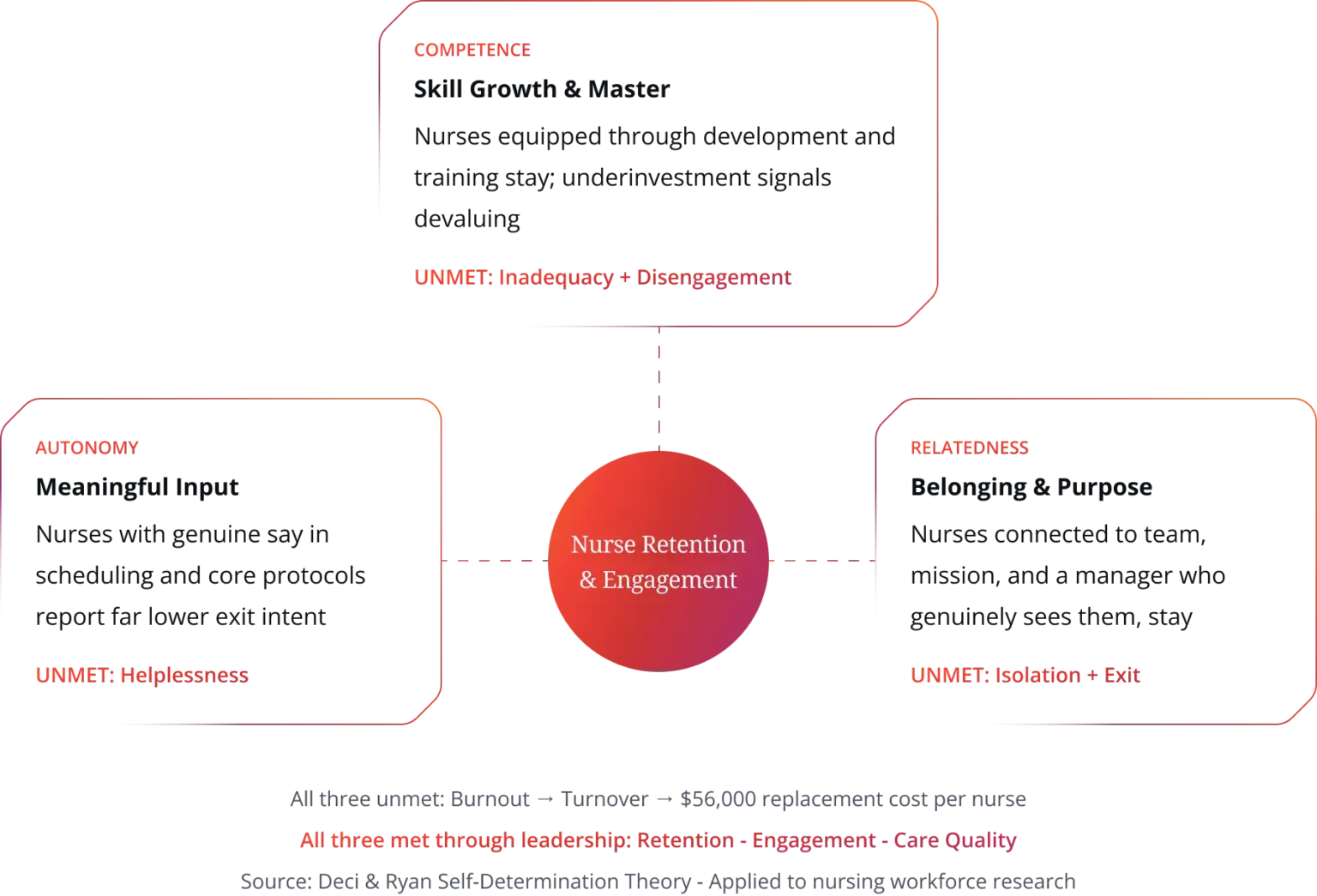
The three fundamental psychological needs that poor leadership leaves unmet are restored through intentional culture design.

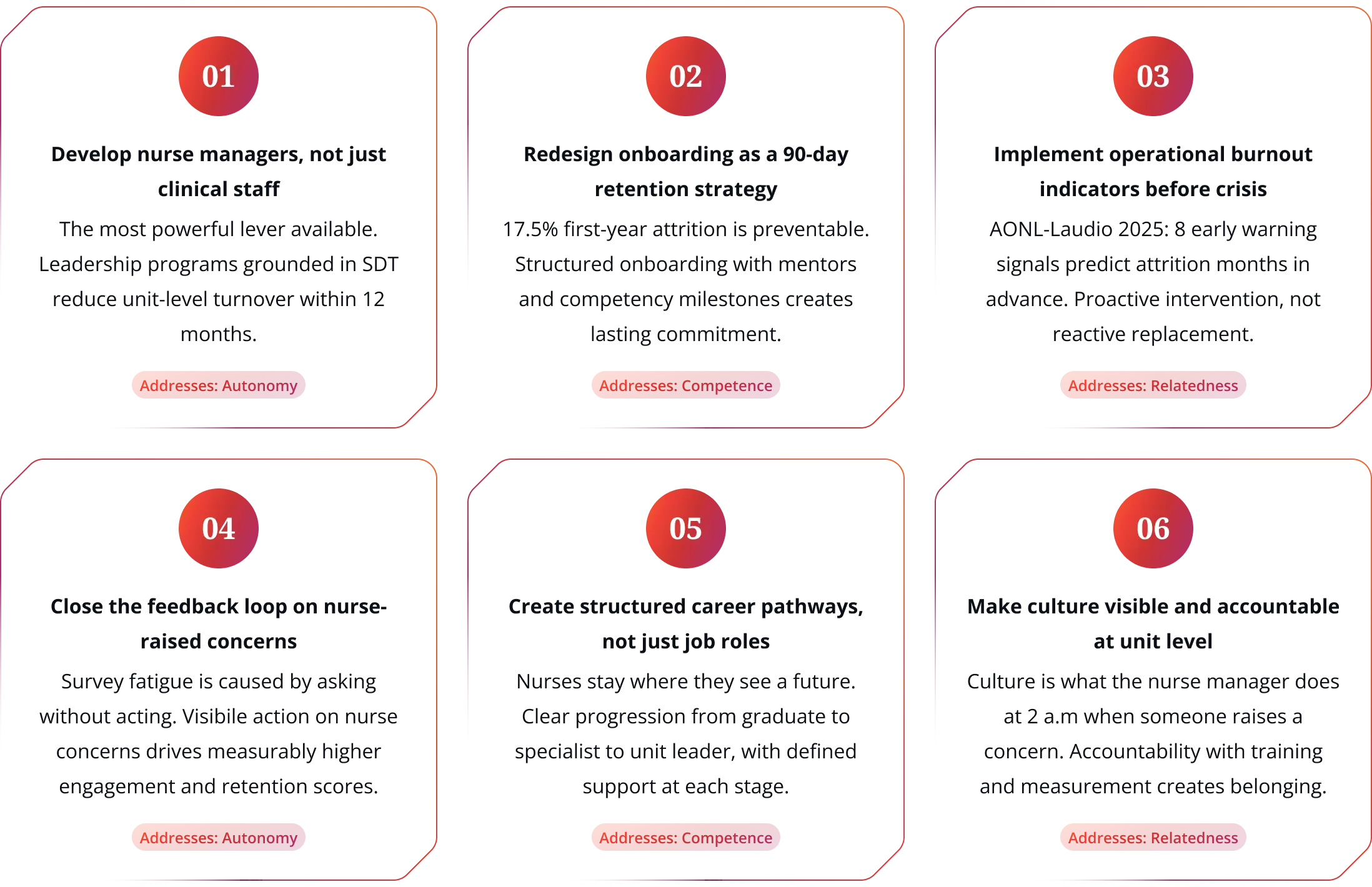
Six Interventions That Actually Move The Needle
Effective retention does not require a revolution. It requires consistency in a short list of evidence-based practices, all achievable with the right leadership capability and organizational commitment.
The Wordsburg Nurse Retention Accelerator
Healthcare organisations spend millions on recruitment and barely anything on developing the managers who determine whether those recruits stay. Wordsburg inverts that calculus, with a structured, time-bound intervention that addresses the root cause of attrition rather than its symptoms.
Our flagship programme, the Wordsburg Nurse Retention Accelerator, is a 22-week structured leadership and culture intervention for multi-site health networks, designed to reduce unit-level RN turnover by 25–40% within 12 months of completion.

Methodology: Three Gated Phases
The program moves through three distinct phases, each with defined inputs, outputs, and measurable gates before progressing to the next.
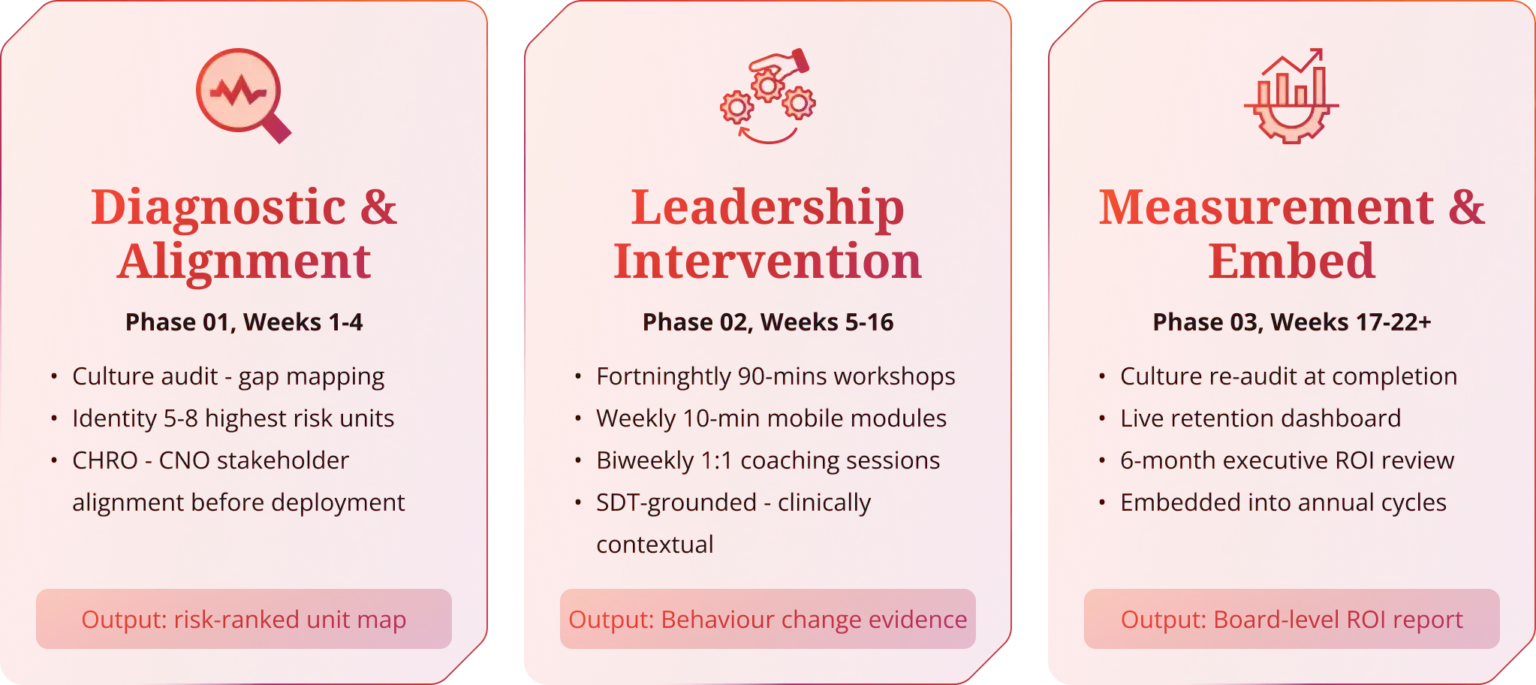
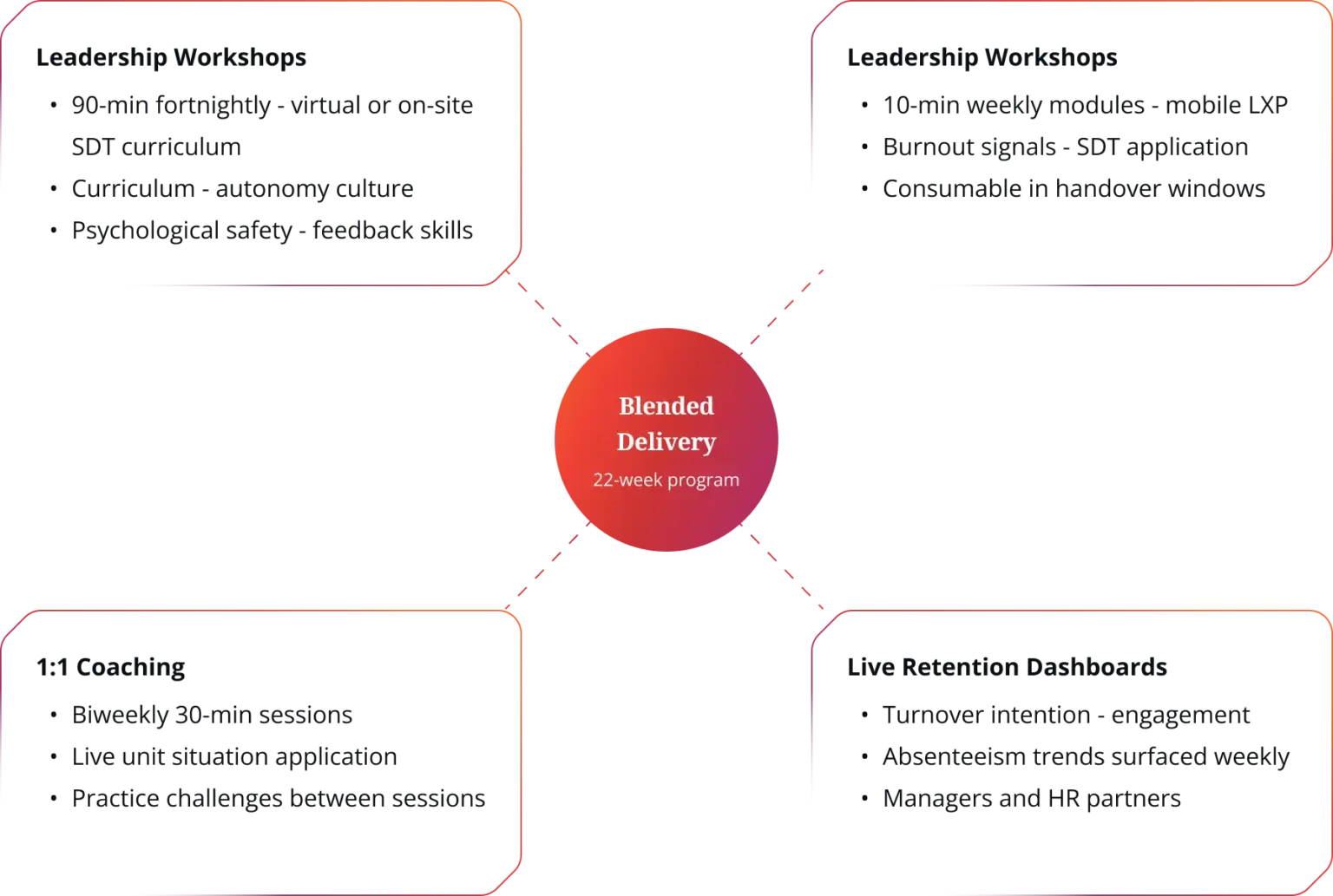
Designed around the clinical reality that nurse managers cannot be pulled from the floor for multi-day training events. Every format is chosen for its fit with healthcare work patterns, not for administrative convenience.
The four interlocking delivery formats converge on a single 22-week behavioural change journey:
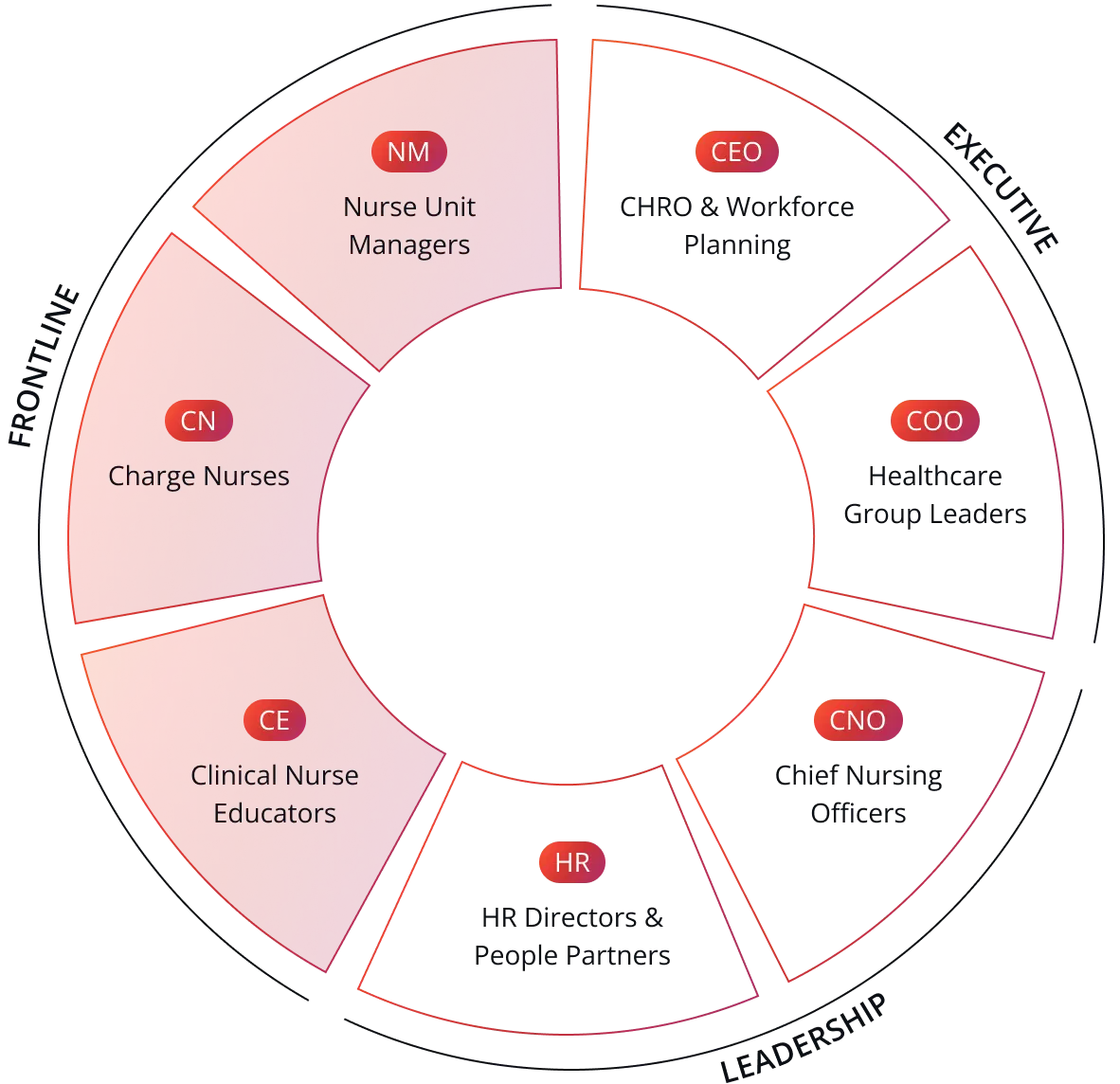
Who This Programme Is For
The Wordsburg Nurse Retention Accelerator is designed for multi-site health networks and hospital groups. The primary audience is the management layer directly responsible for nurse experience, with senior leadership sponsorship as a prerequisite for program effectiveness.
Language Is A Retention Variable Too
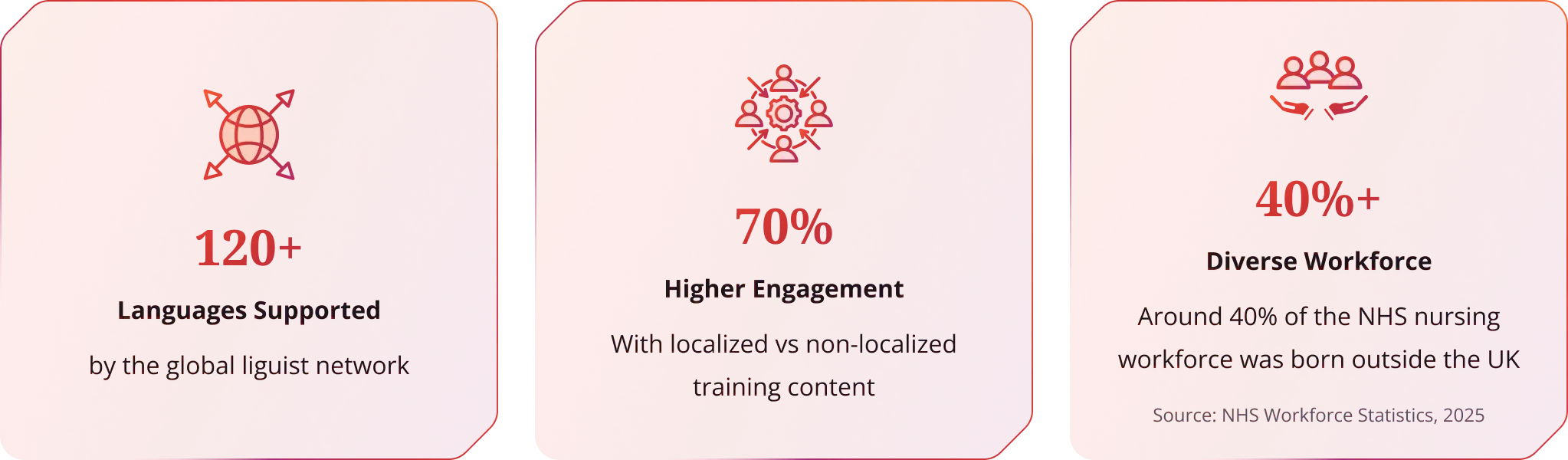
Healthcare is one of the most linguistically diverse workforces on the planet. In a typical large urban hospital network, nursing staff may speak 20 or more first languages. Leadership communication, training content, policy documentation, and even appraisal conversations are almost universally delivered in a single language, and that language is usually not the first language of a significant proportion of the nursing workforce.
The retention consequences are rarely visible in the data because they are attributed to other factors: cultural misalignment, perceived lack of belonging, and disengagement with training. But the mechanism is often linguistic. A nurse who cannot fully understand her manager’s feedback experiences a relatedness deficit, one of the three SDT needs whose absence drives burnout and attrition.

Localization As Retention Strategy
In multi-site health networks, retention challenges are compounded by language barriers, and most organisations are not addressing them.
Language barriers create inconsistent training quality across facilities. Culturally mismatched leadership communication erodes trust and a sense of belonging. Localization is not a compliance checkbox; it is a retention strategy.
Wordsburg’s localization capability means nurse retention programmes can be delivered with cultural and linguistic fidelity across every facility in a multi-site network, translating microlearning into Tagalog, adapting leadership frameworks for Middle Eastern nursing contexts, or ensuring onboarding resonates equally with nurses from the Philippines, India, and Sub-Saharan Africa working side by side in a UK NHS trust.
The Retention Crisis Is Solvable, But Not With The Tools Most Hospitals Are Using
Every sign-on bonus paid, every agency shift filled, every recruitment drive launched is a downstream response to an upstream failure. The upstream failure is this: healthcare organizations have historically underinvested in developing the people who lead others.
The nursing retention crisis will not be solved by paying more. It will be solved by leading better, and leading better is a learnable, measurable, and scalable capability if organizations invest in it with the seriousness they devote to clinical equipment.