
Imagine a world where your BFSI workforce isn’t just keeping up but leaping ahead. A landscape where every frontline agent doesn’t just perform, but truly thrives, armed with precise capabilities for tomorrow’s digital challenges. This isn’t a distant dream; it’s the promise of the BFSI Readiness Cycle, a powerful force in Learning & Development ready for its global resurgence.
Forget the days of generic, one-size-fits-all training. The BFSI Readiness Cycle is an art and science—a strategic orchestration of identifying, cultivating, and refining the unique blend of compliance mastery, AI fluency, and customer resilience that propels individuals and organizations toward unparalleled market dominance. It’s about moving beyond operational firefighting to focus on the transformation that truly drives sustainable revenue and audit-ready excellence.

The Scale Of The Challenge: Future Projections
To understand why this transformation is necessary, we must look at the widening gap between traditional banking skills and the demands of the future. The global BFSI sector faces a dual crisis: a massive technical talent shortage and a revolving door of frontline staff.
- The Widening Technical Gap
As banking becomes increasingly digital, the “proficiency gap” is reaching a breaking point. Without intervention, these shortages in expertise will stall innovation by the end of the year.
| Skill Category | Current Proficiency | 2026 Gap Projection | Annual Demand Growth |
|---|---|---|---|
| AI/ML & Data Analytics | 58% | 42% | 28% |
| Cybersecurity | 62% | 38% | 35% |
| Cloud Computing | 55% | 45% | 22% |
| Compliance (GDPR/DPDP) | 71% | 29% | 19% |
- The Attrition Crisis
The industry average of 103% annual turnover (meaning positions are filled and vacated more than once per year) represents a silent productivity killer. Transitioning to a cycle-based retention model saves the average branch approximately $33,000 annually in replacement costs and lost momentum.
| Metric | Industry Average | Blueprint Target |
|---|---|---|
| Annual Attrition | 103% | 18% |
| Average Agent Tenure | 7 Months | 28 Months |
| Productivity Loss | 45% Capacity | 12% Capacity |

Financial Impact: The Hidden Costs Of Turnover
High turnover isn’t just an HR headache; it’s a direct hit to the bottom line. When 70% of training fails to meet the expectations of a modern workforce, the financial drain is staggering. By implementing a readiness cycle that links certifications to performance, banks can cut quarterly churn from 30% to 10%.
Annual Savings Potential Per Branch
Reducing attrition from 103% to 18% translates into nearly $30,000 in direct savings per branch:
| Cost Component | Industry Cost (103%) | Post-Cycle Cost (18%) | Total Savings |
|---|---|---|---|
| Recruitment | $14,400 | $2,500 | $11,900 |
| Onboarding/Training | $10,200 | $1,800 | $8,400 |
| Productivity Loss | $10,800 | $1,900 | $8,900 |
| TOTAL | $35,400 | $6,200 | $29,200 |

Risk & Innovation: The Cost Of Inaction
The crisis extends to the bank’s ability to innovate. Fragmented data and compliance gaps don’t just slow down operations—they expose the institution to ransomware and regulatory penalties. Current capability shortfalls result in significant “Gap Costs” across major initiatives:
| Initiative | Potential ROI | Actual ROI (with Gaps) | Annual Gap Cost |
|---|---|---|---|
| AI Risk Modeling | 35% | 12% | $54,000 |
| Hyperautomation | 28% | 9% | $38,000 |
| Compliance Digitization | 22% | 7% | $22,000 |

The Solution: The BFSI Readiness Cycle
To bridge these gaps, banks must move away from “one-and-done” hiring and embrace a continuous Audit-to-Evolve loop. This six-step framework ensures that training evolves as fast as the market.
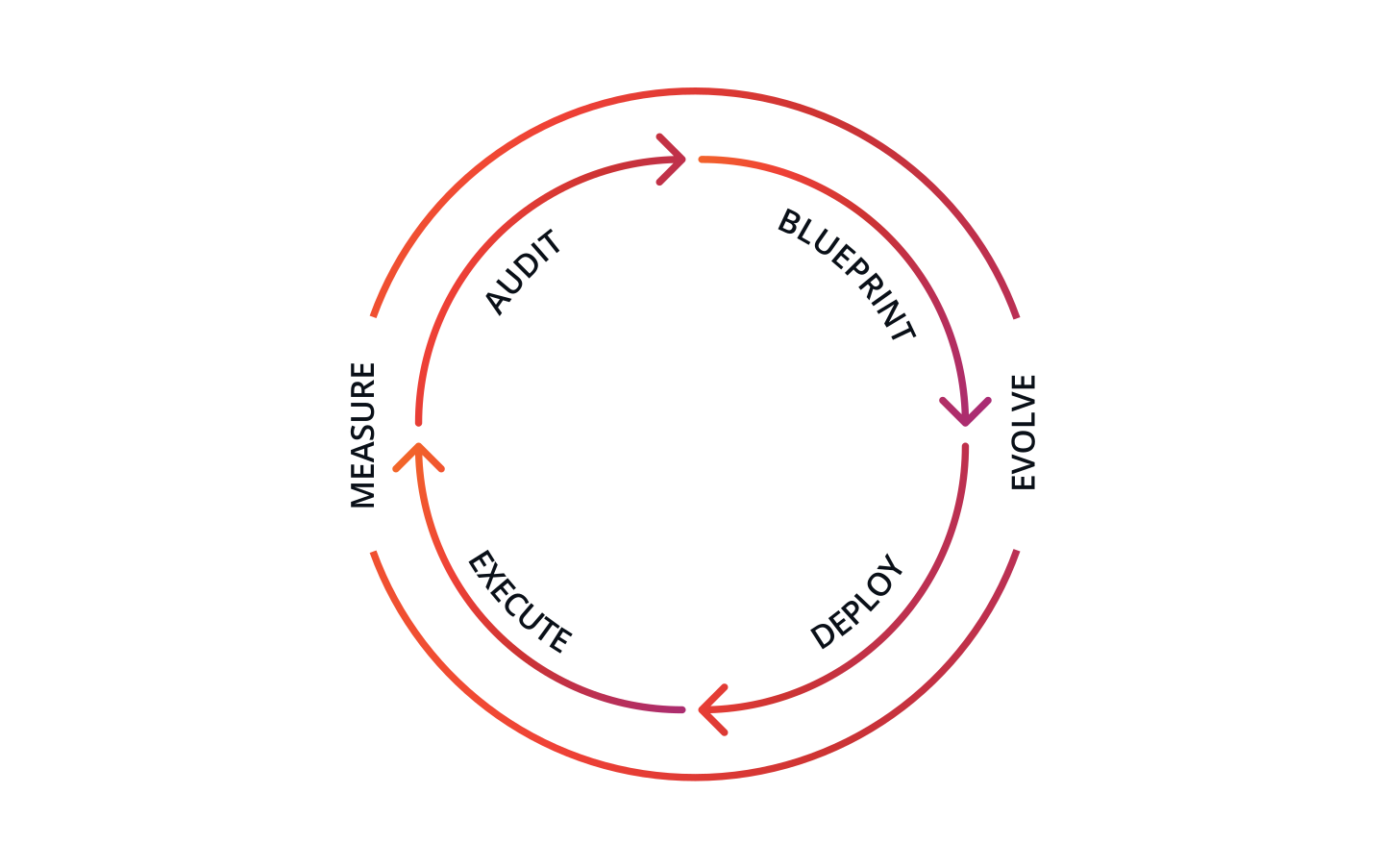
The Six-Step Lifecycle
Step 1: AUDIT
The bank’s AI conducts a quarterly audit of 80,000+ agents to pinpoint systemic weaknesses in compliance and fraud detection.
Step 2: BLUEPRINT
Department heads develop targeted training blueprints, such as AR risk simulations for loan agents and cybersecurity mastery for branch staff.
Step 3: DEPLOY
A 90-day rollout featuring hands-on practice and daily 5-minute micro-learning sessions.
Step 4: EXECUTE
New skills go live immediately. Agents shadow top sellers on MSME deals while AI assistants reduce supervisor queries by 60%.
Step 5: MEASURE
Success is tracked via 4 KPIs: training utility, better test scores, fewer live mistakes, and revenue increase per branch.
Step 6: EVOLVE
AI monitors new laws and automatically updates learning, while spotting turnover risks early to offer proactive support.

Efficiency: Through AI-Driven Competency-Based Recruitment
Beyond training, AI platforms can overhaul the hiring process by infusing a competency model—identifying, assessing, and matching candidates on core skills like compliance knowledge, customer handling, and adaptability. This slashes time to hire while ensuring longer retention through precise talent fit.
| Method | Time to Hire | 1st Month Retention | Cost per Agent |
|---|---|---|---|
| Traditional | 45 Days | 65% | $1,400 |
| AI-Driven | 12 Days | 92% | $540 |
Mastering operational maturity isn’t a “nice-to-have”—it’s the essential engine powering a projected 29% surge in emerging market revenue by 2028. By methodically progressing through this readiness cycle and embedding profitability-first unit economics, banks transform the trillion-dollar opportunity into a sustainable reality.
This delivers elite-level maturity within 12 months through proven structures and operational excellence. Global expansion and digital transformation deserve more than just technical updates—they demand cultural mastery, regulatory precision, and data-driven dominance.