
1. Introduction

RegTech leaders face AI governance mandates, talent shortages, and regulatory fragmentation across APAC—requiring automation with embedded human oversight and 20-30% faster deployments. This playbook equips you with detailed frameworks, diagnostics, role-specific journeys, oversight strategies, localization models, ROI metrics, and RACI matrix to make trusted automation repeatable.
2. Market Pressures

RegTech vendors face intensifying pressures from regulatory evolution and talent scarcity. These stem from demands for audit-ready RegTech 2.0 automation that goes beyond basic digitization, incorporating contextual AI capabilities, no-code workflows, and integrated human judgment to handle edge cases effectively.
Such pressures hit hardest across APAC markets, where regulatory surges include real-time AML/CFT monitoring, AI ethics requirements, eKYC advancements under RBI and MAS guidelines, CBPR+ data flows, and sanctions harmonization.
Leaders must act now—before these regulatory waves intensify further. Vendors and compliance teams bear the primary impact, grappling with persistent talent constraints that drive up operational costs, alongside 20-30% higher false-positive rates and eroded customer trust due to poor automation readiness.
Structured L&D programs counter this by reducing hiring dependency by 30-45%, delivering cost reductions, positioning vendors as enablement leaders, and differentiating their competitive standing.
3. Why Assess Readiness?

Automation readiness assessments unlock 20-30% faster deployments and 15-25% reductions in false positives.
Take specific actions based on scores: prioritize high-impact roles, such as operations and consulting, for low scores; target 1-2 priority markets or journeys for moderate gaps; and focus on scaling optimizations for high readiness.
Benefits materialize across operations (shorter sales cycles), revenue streams (reduced escalations), and audit processes (sustainable trust and multi-market success).
Intervene immediately following scoring—within the first 6 months. Compliance and L&D heads should lead these efforts.
Execute via playbook rollout with quarterly KPI tracking, transforming compliance from a cost center into a growth engine and proving ROI to secure leadership investment.
4. Readiness Diagnostic (10-Point Checklist)
This diagnostic enables compliance heads, L&D leads, and solution architects to quickly score automation gaps on a 0-10 “Number” answers scale, identifying what specific team and process weaknesses exist, where these gaps occur across organizational functions, when to conduct assessments before deployments or market expansions, why immediate action prevents risks like elevated false positives, and how prioritized fixes through technical labs and judgment modules deliver actionable interventions within minutes.
| Question | Detailed Rationale | Score Impact | Quick Fix Priority |
|---|---|---|---|
| Teams understand rule logic/data flows? | Prevents 15-25% false positives | High | Technical labs |
| Override training for regulators? | Audit-defensible escalations | High | Judgment modules |
| Engineers know regs? | Avoids compliance gaps | Medium | Workshops |
| CS explains risk reductions? | Boosts adoption | Medium | ROI playbooks |
| Training localized? | Fits regional nuances | High | Adaptations |
| L&D aligns with the roadmap? | Enables releases | Medium | Governance |
| Auto-updates trained? | Closes gaps | High | Just-in-Time (JIT) modules |
| KPIs tracked? | Proves ROI | High | Metrics sheet |
| Learning in deployments? | Prevents skips | Medium | Templates |
| Global-local governance? | Scales rigorously | High | Syncs |
Scoring: 0-3: No answers indicate an optimization for scaling; 4-6 suggests targeting specific roles and markets; 7-10 demands a strategic-priority overhaul.
5. RACI Matrix For Automation Enablement Implementation

This RACI matrix clarifies who leads (Accountable), executes (Responsible), provides input (Consulted), and stays informed (Informed) across key enablement activities for RegTech automation deployment, ensuring clear ownership, preventing bottlenecks, and accelerating rollout across engineering, compliance, operations, and customer success teams.
| Activity | Leadership | Engineering | Compliance | Operations | L&D | Customer Success |
|---|---|---|---|---|---|---|
| Readiness Assessment | A | C | R | I | C | I |
| Training Journey Design | A | R | C | C | R | C |
| Content Localization | A | I | R | C | R | C |
| Rollout Scheduling | A | C | C | R | R | C |
| Progress Tracking/Metrics | A | I | C | R | R | I |
| Oversight Simulations | A | C | R | R | C | I |
| ROI Reporting | A/R | I | C | I | R | C |
| Regional Expansion Planning | A | R | R | C | C | R |
RACI Legend: Responsible (does the work), Accountable (ultimately answerable), Consulted (two-way communication), Informed (one-way updates).
6. Role-Based Training Journeys (8-12 Weeks Each)
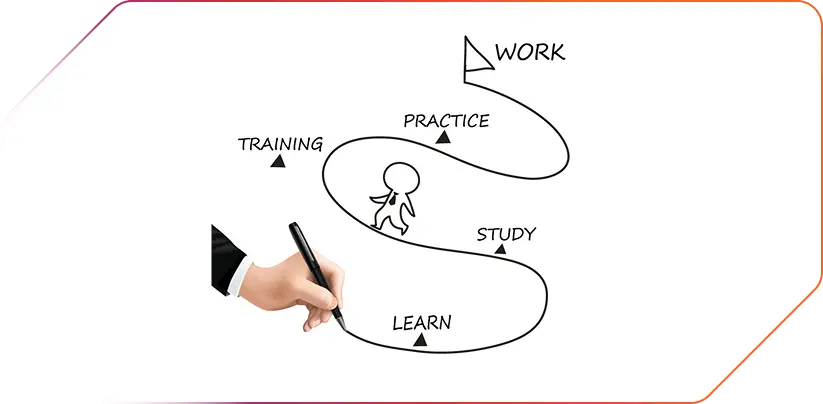
These comprehensive plug-and-play learning paths serve engineers, consultants, operations teams, and customer success staff, delivering structured content tied to solution roadmaps and regulatory calendars, deployable through learning management systems, designed for maximum retention through a 20% eLearning, 30% labs, 30% simulations, and 20% live sessions blend to ensure roadmap-aligned enablement across global teams.
A. Engineering & Product Training Journey
This journey targets engineering and product teams to build technical mastery in rule engines, AI/ML models, and DevSecOps practices, ensuring delivery of compliant high-accuracy features aligned with regulatory nuances starting from day one through progressive onboarding, ramp-up phases, ongoing release enablement, and quarterly upskilling conducted in dedicated labs and sandbox environments.
| Week | Focus Areas | Training Methods | Key Outcomes |
|---|---|---|---|
| 1-2 Onboarding | Vision/portfolio, architecture (rules/data/API), AML/sanctions basics | e-Learning modules, live orientation | Understand solution boundaries |
| 3-6 Ramp-Up | Rule languages, ML modelling, data pipelines | Video labs, sandbox experiments, peer challenges | Build core technical skills |
| Ongoing Release Enablement | Feature impacts on accuracy/outcomes | JIT microlearning, gamified quizzes | Ready for each release cycle |
| Quarterly Upskilling | Advanced logic, AI recs, regulatory enrichment | Personalized paths, deep-dive sessions | Stay ahead of the roadmap |
B. Compliance Consulting & Implementation Training Journey
This journey equips compliance consultants to master rule configurations, scenario handling, and customer adoption strategies, bridging global compliance standards with local regulatory interpretations through foundational knowledge, core skills development, client enablement phases, and ongoing quarterly updates delivered via workshops and hands-on laboratories.
| Week | Focus Areas | Training Methods | Key Outcomes |
|---|---|---|---|
| 1-2 Foundational | Reg landscape, platform flows, client pains | e-Learning, case studies | Grasp global/local compliance |
| 3-6 Core Skills | Rule configs (monitoring/sanctions), structuring/PEPs scenarios | Hands-on labs, scenario workshops | Configure/defend rules |
| 7-8 Customer Enablement | Train-the-trainer, customization, change management | Live simulations, customer playbook builds | Drive customer adoption |
| Quarterly Ongoing | Regulatory updates, multi-jurisdictional cases | Briefings, best-practice shares | Maintain cutting-edge expertise |
C. Operations & Exception Handling Training Journey
This journey develops operations teams’ real-time judgment capabilities for escalations and audits, reducing false positives through scenario-based mastery and continuous in-flow support tools, structured across foundations building, scenario practice, ongoing real-time assistance, and quarterly advanced case analysis conducted through simulations and performance analytics reviews.
| Week | Focus Areas | Training Methods | Key Outcomes |
|---|---|---|---|
| 1-2 Foundations | AML rules, red flags, automation triggers | e-Learning, overview sessions | Recognize intervention points |
| 3-6 Scenarios | False positives, structuring, escalation sims | Real-case simulations, inquiry practice | Master judgment calls |
| Ongoing In-Flow | New rules, product updates | EPSS tools, microlearning, peer discussions | Real-time decision support |
| Quarterly Advanced | Multi-layer cases, perf analytics | Case studies, analytics reviews | Optimize team performance |
D. Customer Success & Sales Training Journey (6-8 Weeks)
This journey equips customer success and sales teams to position automation solutions as compliance accelerators by mastering ROI narratives, objection-handling techniques, and structured onboarding processes to shorten sales cycles and maximize lifetime value through solution mastery, messaging refinement, and customer onboarding phases delivered via interactive demonstrations and role-play workshops.
| Week | Focus Areas | Training Methods | Key Outcomes |
|---|---|---|---|
| 1-2 Solution Mastery | Mechanics/value creation, objections/cases | Interactive demos, success stories | Confidently position the solution |
| 3-4 Messaging | ROI translation, risk mitigation framing | Role-play workshops, ROI calculators | Articulate business value |
| 5-6 Onboarding | Customer assessments, project planning, and advocacy | Planning simulations, change management modules | Ensure smooth implementations |
Implementation: Load journeys into LMS platforms, track progress through analytics dashboards, and customize content for specific markets and roles as needed.
7. Oversight Integration (Human-In-The-Loop Design)

This guide targets operations and compliance teams to embed human judgment training that counters automation pitfalls, delivering 15-25% reductions in false positives through structured pre- and post-deployment sessions, edge-case scenario modules, gamified simulations, and continuous escalation tracking integrated directly into operational workflows.
Steps: Conduct targeted sessions to define automation boundaries, develop scenario modules that address real-world edge cases, such as freelancer transaction alerts, implement regular gamified simulations for judgment calibration, and establish metrics to track escalation quality and service-level agreement performance.
8. Regional Scaling (Global-Local Balance)

This framework guides global L&D teams and local operations to achieve scalable compliance rigor across all expansion phases. It balances centralized global standards with localized adaptations, using structured governance models and AI-powered localization tools. The framework enables consistent interpretation and implementation of regulatory expectations worldwide. It does this by mapping common compliance themes—such as conduct, risk management, data protection, and operational resilience—across diverse jurisdictions. It also automatically tailors content, language, and context to local legal and cultural requirements.
- Governance: Central teams manage strategy and performance metrics while local teams handle delivery and feedback loops with bi-weekly synchronization meetings.
- Tools: Deploy multilingual LMS or LXP platforms alongside AI-driven translation and regulatory term mapping workflows.
9. ROI Metrics Sheet (Board-Ready Tracker)
This tracker equips executive leaders and investors to demonstrate that learning and development investments deliver 15-25% business impact through structured KPIs, enabling quarterly baselining, tracking, and correlation with specific interventions for compelling boardroom presentations.
| KPI | Measure/Formula | 6-Month Target | L&D Link | Why It Matters |
|---|---|---|---|---|
| Time-to-Implement | Days to live | -25% | Journeys | Revenue acceleration |
| False Positives | Escalations/Alerts % | -20% | Oversight | Cost reduction |
| Team Confidence | Survey average | +15% | Sims | Trust building |
| NPS | Post-onboard | +12 pts | Localized | Retention |
| Adoption | % Advanced use | 75%/60d | Onboarding | Value unlock |
| Efficiency | Decisions/hour | +18% | Integration | Lean scaling |
Ready to turn insight into action? Connect with us to see how RegTech leaders and compliance executives are using these automation diagnostics and readiness frameworks to sharpen strategic planning, de-risk solution deployments, and align talent capabilities, compliance rigor, and product roadmaps in one unified view. Together, we’ll help you determine the best-fit path for self-administered diagnostics or facilitated deployment—starting with a focused pilot around your highest-stakes markets, products, or teams.
Recommended
Discover our Fintech Learning & Compliance Readiness Kit, designed to make compliance training a driver for growth. Built on APAC regulations and Fintech best practices, it helps teams launch 40% faster, reduce regulatory issues by 25%, and reach full productivity in just 60 days.
You’ll get executive self-assessments, templates for different roles, compliance blueprints that fit within sprints, and ROI-tracking sheets. These tools help you scale 4x faster, boost adoption by 30%, and provide investors with clear proof of safe growth.